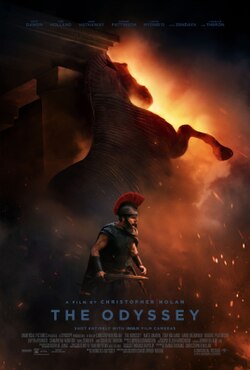
Christopher Nolan has built an incredible reputation to become one of the most ambitious filmmakers in and of his generation. His movies are often known for enormous productions, most especially the part of complicated narratives, practical effects, unusual approaches to time and reality, and stories that often leave audiences wrestling with difficult and most times unanswered questions long after the credits roll.
Christopher Nolan 2026 latest film, The Odyssey, continues many of those interests listed above and this time, he took them into the world of ancient Greek mythology.
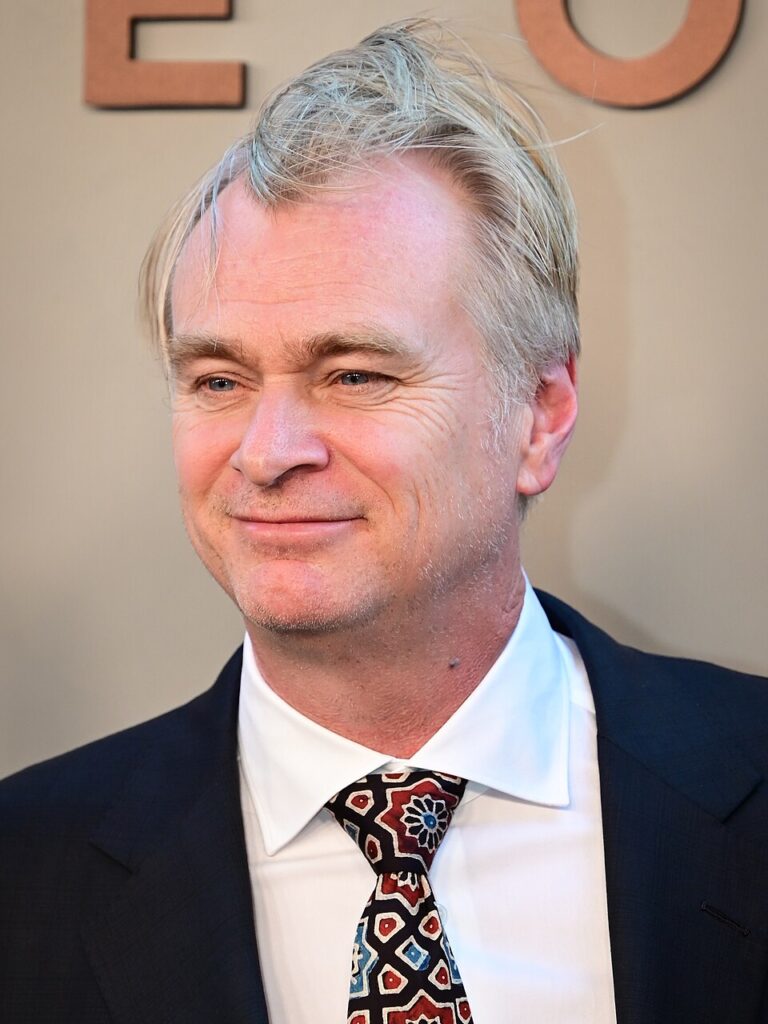
The movie “The Odyssey” is based on Homer’s ancient epic and follows Odysseus, played by Matt Damon, as he finds himself struggling through to return home after the Trojan War. Along the journey, he encounters unknown dangerous creatures, supernatural forces, temptation, violence and lastly the consequences of his own decisions.
For Nolan, however, The Odyssey movie story appears to be about more than a legendary adventure.
A Filmmaker Fascinated by Human Struggle
Throughout the stay and continuity of his career, Nolan has repeatedly returned to questions about human identity, the sacrifice, time, memory and the consequences of one personal choices.
Films such as The Dark Knight, Inception, Interstellar, Dunkirk, Tenet and Oppenheimer approach these same subjects from different settings and dimensions but they share an interest in people confronting circumstances larger than themselves.
FaithChannels.com notes that some of Nolan’s earlier films and crafts appeared to move toward themes such as sacrifice and hope, while his more recent films work has increasingly focused on human destruction, guilt and the consequences of ambition.
That development is as well traced to his recently released movie, The Odyssey which makes the earlier description of his films focus more vulnerable.
From Heroes To Broken Men
Nolan’s protagonists (The main character in a story, book, movie, or play) have rarely been uncomplicated heroes.
The Dark Knight trilogy movie, Bruce Wayne was willing to sacrifice himself for Gotham, while Cooper in Interstellar sacrifices years of his life in an attempt to secure humanity’s future and eventually reunite with his family.
Another watery dripping jaw was his 2010 directed movie, Inception, where Dom Cobb is consumed by his desire to return to his children. Dunkirk’s attention was centers on soldiers and civilians desperate to survive and return home.
Don’t forget there’s also Oppenheimer, which focuses on the scientist behind the development and inventory of the atomic bomb, examines the devastating consequences of human achievement.
The Odyssey is all in one because it brings many of these interests together.
Odysseus is smart, courageous and as well intelligent, but something terrifying happened, he is also responsible for the decisions that lead to suffering and death. His journey is therefore not simply a story about a heroic man trying to reach his destination. It becomes a story about the cost of his journey.
The Meaning of Home/Christian Thought
One of the central ideas, focus and aims surrounding The Odyssey is the desire to return home.
Odysseus spends most of the years attempting to reach his family in Ithaca, where his wife Penelope and son Telemachus were waiting for him. But the journey makes a U-turn and changes him completely.
FaithChannles columnist Bryant Walker casually examined Nolan’s film through the idea of homesickness, and finally stated that the story connects with a universal human longing for a place where people can belong, be value and be known. That longing in particular also has a strong connection with Christian thought.
The Bible has numerously described human beings as constant travelers and pilgrims who are looking toward something beyond their present condition or circumstances. Abraham leaves his homeland. The Israelites travel through the wilderness. The early Christians are repeatedly described as people journeying toward a greater promise.
For Christians, therefore, the desire for home can become a picture of humanity’s deeper desire for restoration and belonging.
The Problem With The Journey
Mind you, Nolan’s Odyssey does not always or should I say simply celebrate everything Odysseus accomplishes.
Many of the apparent victories during his journey always come with consequences. Meaning there’s always a price to be paid for.
Odysseus survives dangerous encounters, but other people die. He continuously defeats the enemies, but violence continues to follow him. He repeatedly pursues what he wanted, but yet the pursuit itself creates new and more problems.
This fits a recurring concern in Nolan’s work: human beings often possess extraordinary abilities while remaining deeply flawed.
The filmmaker’s stories frequently place, smart, intelligent, determined people in situations where their choices often produce consequences they cannot completely control.
That tension is particularly strong in The Odyssey, where Odysseus is both a powerful leader and a deeply imperfect man.
Questions About Faith
Christopher Nolan’s personal religious beliefs have been the subject of discussion for over the years, but he was educated within the Catholic environment.
His films generally has never offer straightforward Christian answers. Instead, they continue to frequently explore questions that overlap with religious concerns: What gives life meaning? Can sacrifice have value? Can people change? What happens when ambition becomes destructive? Is humanity capable of overcoming its own worst tendencies? And to be sincere, this is overwhelming.
In most cases, Nolan’s films sometimes appear to move toward transcendent questions without explicitly embracing a Christian understanding of God. That makes The Odyssey particularly interesting for Christian viewers.
The ancient centred story contains gods, supernatural events and moral consequences, but in Nolan’s cases, adaptation places considerable attention on human choices and their consequences.
A Continuing Search
Instead of presenting Christopher Nolan as a filmmaker who has finally arrived at a clear religious conclusion, his recent work “The Odyssey” can be understood as continuing his long-running exploration of human existence.
His films over the years have repeatedly asked where people are going, what they are willing to sacrifice to get there and whether the things they pursue will actually satisfy them at the end.
The Odyssey summarise those questions into an ancient setting.
Odysseus plans were to get home, but his journey later forces him to confront the violence, pride and loss that have shaped his life.
That makes the film more than a spectacular adventure. It gives another chapter in Nolan’s ongoing fascination with humanity’s search for meaning.
Whether audiences view the story primarily as Greek mythology, an epic adventure, a meditation on human nature or a spiritual journey, its central questions still remain familiar.
People want to find home. They want their lives to matter. They want their suffering to have meaning. And they continue searching for something capable of satisfying desires that the world itself often cannot fulfill.
For Christopher Nolan, those questions have been present throughout his career.
With The Odyssey, he has simply taken that search back to one of the oldest stories ever told.