
In every winning story, there’s always a pain behind it. Before Young George Washington finally became the first president to rule the United States and later one of the most recognizable outstanding figures in American history, he was just a young man who was trying to establish himself through the dangerous colonial frontier.
That earlier chapter of Washington’s life is the main focus of Young Washington, a 2026 trending historical drama that’s directed by Jon Erwin, released through the Angel Studios and Wonder Project. The film stars William Franklyn-Miller, representing Young George Washington and follows his early age experiences as a surveyor, military officer and emerging leader.
The movie was released during the United States’ 250th anniversary, and attempts to portray Young Washington before the familiar images of the Revolutionary War and presidency defined his place in history.
Young Washington Before The Revolution
Young Washington has begun long even before he became the commander of the Continental Army.
At the center of the historical story, is a young George who is very determined, ambitious, adventurous to prove himself. Instead of depicting him as the already-polished statesman seen in later portraits, the movie “Young Washington” presents him as a young man still learning how to lead.
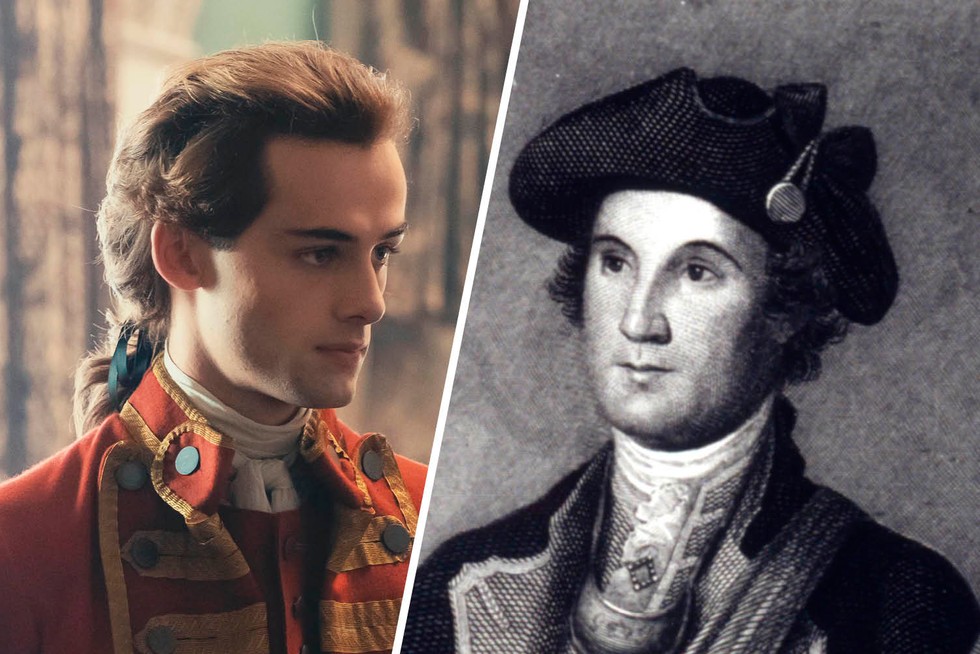
The official description says that Washington’s first major mission has earned him a thrust into an international conflict. His early military experience wasn’t’ that fair because it exposed him to failure, danger and difficult decisions that eventually shaped the leader he became.
William Franklyn-Miller, who was around 22-years when the film was released, takes on the title role. His performance presents Washington as a youthful and physically active young man, a contrast to the older image Americans commonly used to associate with the nation’s first president.
A Young Man Shaped By Failure
One of the central themes and scenes to focus on the film is failure.
Washington’s early stages in his military career did not begin with a string of victories. His first ever major command attempt ended in defeat at Fort Necessity in 1754.
That particular historical event later amounts to part of the chain of conflicts that developed into the French and Indian War. Washington was still very young at that time, and some of the things he experienced demonstrated how unprepared he was for some of the realities behind military leadership.
The film uses these failures and earlier experience as part of Washington’s development rather than presenting him as a flawless historical hero.
His early stages of leadership experiences include dangerous journeys through the wilderness, military confrontations and some of the moments in which his decisions have serious consequences. Historical records confirm that Washington experienced extreme danger during his early frontier expeditions, this includes an incident in which he and fellow traveler Christopher Gist have no choice than to spend a freezing night on an island after their raft journey became hazardous.
The Battle That Changed His Reputation
One of the film’s major sequences centers on the Battle of the Monongahela in 1755.
Washington was serving under British General Edward Braddock during the campaign. Along the line, the battle ended disastrously for the British forces, and Braddock was mortally wounded.
Washington, however, survived.
Historical records further describe an extraordinary series of close calls and brutality. According to it, two horses were reportedly shot right beside him, while several bullets penetrate through his clothing. Despite the chaos which was surrounding him, Washington survived the battle and helped to lead surviving troops away from the battlefield.
The movie dramatizes this extraordinary survival of Washington moving through an intense enemy fire, while appearing almost impossibly difficult to kill.
The was the moments the film connects then Washington’s historical story with the idea of divine providence.
Faith and the Idea of Providence
Although Young Washington is associated with Christian filmmakers and a faith-based entertainment company, Christianity is not presented through constant preaching or extended religious scenes.
Instead of that, the film made an approach through Washington’s faith and concept of Providence.
Faithchannesl reviews further notes that the movie provides relatively little depiction of Washington participating in a private prayer or ordinary church life. Instead, his survival during battle and the film’s use of the so-called Indian Prophecy contribute to the suggestion that his life may have been guided by something beyond his own ambition.
Both in real life and the movie account stated that, the historical question surrounding Washington’s personal faith is complicated.
Washington was linked with the Anglican Church and came from a family with Christian connections, but historians have numerously debated the nature and depth of his personal religious beliefs. FC Media noted that Mount Vernon describes Washington as a devoted Anglican while also acknowledging the broader historical debate that was surrounding his personal faith.
The filmmakers therefore chose to portray his spiritual development as something still unfolding.
From Personal Ambition to Leadership
Another major theme you need to understand about this movie and his life is Washington’s understanding of leadership.
Watching carefully you will notice that, at the beginning of the story, he is driven by ambition and a desire to prove that he can accomplish something significant and different. His older brother Lawrence reportedly warns him about pride and the dangers of allowing his ambition to control him.
As Washington experiences failure, losses and bitter experiences, the film immediately begins moving him toward another understanding of leadership.
The movie Director, Jon Erwin, has explained that he wanted the movie to explore Washington’s progression from his personal ambition toward servant leadership. The film’s spiritual framework is strongly connected to the biblical principle that greatness is associated with serving others.
That makes Young Washington less about the finished national hero and more about the process that created him.
A Different Portrait of George Washington
The film also reminds the audiences that the celebrated hero, Washington was once an inexperienced young man rather than the distant figure represented in history books and paintings.
He made some mistakes. In his first lead battle, he experienced defeat. He entered dangerous situations without fully understanding their consequences. But yet those experiences became part of his education.
The official film synopsis then describes Washington as a soldier who was forced to confront his enemies as well as the person he was becoming.
That idea forms the foundation of the movie.
Young Washington ultimately presents the future president at the beginning of his journey rather than at its conclusion. His famous achievements are still decades away, but the qualities that would later define his public life, courage, ambition, endurance and an evolving understanding of leadership are already beginning to emerge.
For viewers interested in American history, the film offers a dramatized look at a lesser-known period of Washington’s life. For Christian audiences, it also raises questions about providence, failure, ambition and the possibility that a person’s early mistakes can become part of the process through which character is formed.
George Washington did not begin his historical journey as the finished figure who is being remembered today. He waa having no idea about what he was digging for. The starting point of his leadership begins with him being ambitious.
Young Washington tells the story of the young man before the legend and the difficult experiences that helped shape the leader who would eventually become one of the most consequential figures in American history.