
Scientists Drill Into Turkey Site Linked to Noah’s Ark, Drilling noah’s ark, Noah’s ark core drilling, Drilling Begins At Suspected Noah’s Ark site in Turkey
There’s a major new investigation which is underway at a controversial boat-shaped found formation in eastern Turkey that some scientists or let me say researchers believe could be connected to the ancient biblical account of Noah’s Ark.
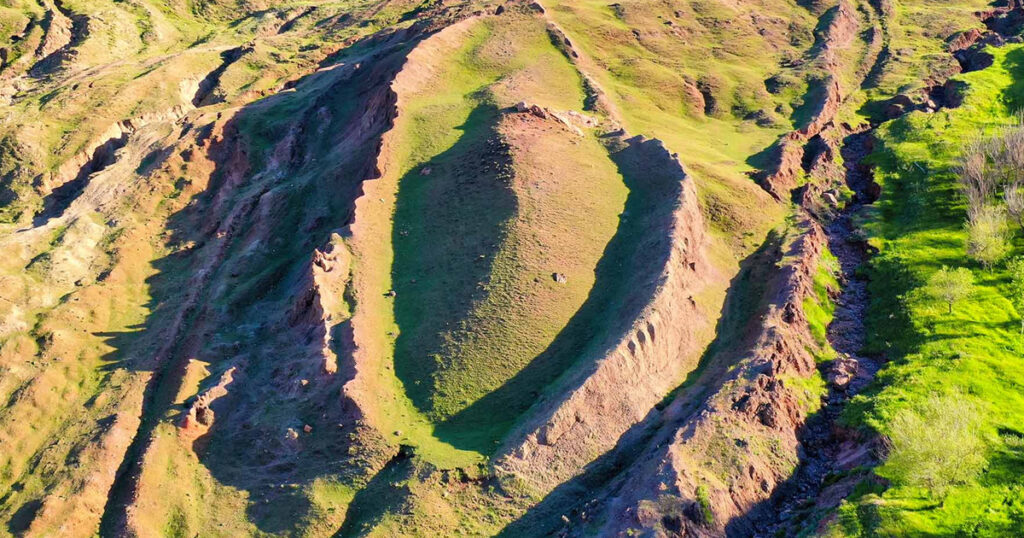
The Noah’s Ark suspected found site is known as the Durupınar Formation, which is located near Mount Ararat and has been debated for more than six decades. Around September 2026, Some international researchers team who were too curious about the Ark shape look began a new phase of investigation involving “Deep Core Drilling” and plans to send a specially designed underground robot into spaces identified beneath the formation.
The objective is not simply for them to photograph the unusual landscape. The researchers are now attempting to obtain physical samples right from the underground that can be examined in laboratories.
What Are Researchers Looking For?
The team researchers behind the project, Noah’s Ark Scans, stated that, it’s main aim is to specifically investigate whether the formation contains evidence of an ancient wooden vessel.
Researchers continue in drilling and they have collected enough cores samples from depths reaching approximately 18 meters, or nearly 60 feet. The samples are intended for compositional, organic and stratigraphic testing.
One of the curious major questions at the moment is whether any of the material could by anyway represent decayed, mineralized or petrified wood.
The researchers have also reported that, they have recovered layers containing substantial organic material and during the process encountering several underground cavities. However, these observations have not by themselves established the facts that the material came from a wooden ship. At this point, laboratory analysis will be necessary to determine its actual composition.
The team further stated that, they also want to investigate unusual underground features which were identified during earlier geophysical surveys. Ground-penetrating radar and electrical-resistivity surveys have reportedly indicated possible linear features, voids and spaces that the researchers describe as corridors or compartments.
Those interpretations give another important part of the investigation because researchers are curious to know whether the features have a human-made explanation or just a result of natural geology.
A Drill Bit Breaks Underground
One of the most discussed things about the developments occurred when drilling encountered an extremely hard layer rating approximately four to five meters below the surface.
Report from Noah’s Ark Scans stated that, the underground material found was hard enough to break the drilling bit. The research team then suggested that highly mineralized or petrified wood could possibly be found after this.
That Remains Only A Possibility.
The researchers have made it known that, the said material will require an independent laboratory testing to be sure before any conclusion can be drawn about what caused the drilling equipment to fail.
This distinction is very much important because a broken drill bit is not totally a proof of petrified wood or an ancient ship. Hard geological material can also damage drilling equipment during a thorough research.
The GOPHER Robot
Another angle of the investigation is a small underground exploration robot called the GOPHER.
The machine or robot is designed to enter any narrow openings created during the drilling process and to help investigate areas that would seem difficult or impossible for researchers to penetrate directly.
The robot is made with a high-resolution camera and is intended to provide a high visual information from underground spaces. Its name is a reference to the biblical description of the Ark being constructed from “gopher wood.”
Researchers are hoping the combination of core samples and underground images will therefore provide a clearer picture of what is actually beneath the formation.
Why Is the Site Associated With Noah’s Ark?
The Durupınar Formation is pinned to approximately 157 meters, or 515 feet, long, giving it a shape size that most supporters have compared with the biblical measurements of the Noah’s Ark.
The book of Genesis describes the Ark as being 300 cubits long, 50 cubits wide and 30 cubits high.
The unusual shape of the Durupınar formation has therefore attracted different Ark researchers for the past decades. The feature was sometimes identified in aerial photography in 1959 by the Turkish Army Captain İlhan Durupınar.
Since then, multiple researchers who aim for better information have investigated the site, producing sharply different interpretations to what they experience or saw.
Supporters of the Ark theory argue that its shape, dimensions and reported underground features warrant continued investigation. The current team investigating the site believes modern scanning technology and physical sampling can test some of those claims more directly than previous investigations.
But Has Noah’s Ark Been Found?
The answer to this question is No. The current drilling process or investigation does not establish that Noah’s Ark has been discovered.
That Point Is Crucial.
The Durupınar Formation has been rejected long ago as Noah’s Ark by geologists who argue that it can be explained through an ordinary geological processes. Previous studies further explained that the formation is a natural structure which involves the limestone and other geological materials, potentially or naturally shaped by landsliding, deformation or an erosion.
But, the current investigation is effectively testing two competing possibilities. One of the possibilities is that the formation or the ark shape look-alike represents the remains of an ancient vessel that became buried and heavily altered over time.
The other is that its ship-like appearance and underground features have natural geological explanations. The physical samples currently being collected could help researchers evaluate those competing explanations, before finalizing that’s not the said Noah’s Ark.
Why The 2026 Noah’s Ark Investigation Matters
Previous investigations that were done relied heavily on just surface observations, photography and geophysical scanning, and this doesn’t give the expected result. The current expedition is different because researchers are attempting to recover material directly from beneath the formation for laboratories investigation.
The team says its work is being conducted under the Turkish authorization and also with the participation of Turkish academic researchers, including archaeologist Prof. Dr. Cenker Atila of Sivas Cumhuriyet University.
The researchers plan is simple, for them to continue analyzing the recovered cores and investigating the underground spaces with the help of the GOPHER robot.
For Christians communities and others interested in the biblical story of Noah and the Ark, the new project research has generated significant interest because it could potentially provide new information about one of the most famous archaeological mysteries associated with Scripture. However, the evidence remains under investigation.
At this stage, researchers have found unusual geological features, organic-rich material, underground cavities and a very hard subsurface layer, but they have not publicly established that these materials are part or remains of Noah’s Ark.
The coming laboratory analyses and underground imaging will therefore be especially important for more understanding.
For now, the question remains open and unanswered: Is the Durupınar Formation the remains of an ancient vessel, or is its remarkable shape the product of natural geological forces?
The 2026 drilling campaign is designed to move the debate from speculation toward physical evidence, but the final answer will heavily depend on what the samples and subsequent scientific analyses actually proof.